
Wealth Management and Investments
Wealth management and investment are two pillars for anyone looking for harmony of wealth and financial growth. Wealth management is a comprehensive approach to financial planning that takes into account your individual goals and circumstances along with the strategies used to protect, grow and transfer your wealth. Investment is a means of achieving the goals […]
Continue reading
Financial Modeling Basics
Financial modeling is an invaluable tool for businesses, providing insight into their financial information and allowing them to make informed decisions. A successfully created financial model should provide the user with an understanding of the current financial structure of the business, as well as potential future scenarios. Key elements to a successful financial model The […]
Continue reading
Data visualizations by finance professionals and accountants
Data visualizations is the new way of presentation for financial professionals, accountants, and business analysts. As technology continues to rapidly expand, data visualizations and story-telling have become invaluable resources for understanding financial information. Unification and simplification of data Data visualizations unify data that a business is using and enable stakeholders to easily see the key […]
Continue reading
Value Creation Through Connection!
Offering value through connection is a critical aspect of managing a team successfully. Through understanding how to connect with your team, motivate them, and engaging with them in an authentic manner, you can create a high top-notch environment that encourages high performance. People Business To engage with team members in an authentic manner, you must […]
Continue reading
Derivatives and Hedge Accounting
Derivatives A call (put) option is the right to purchase (sell) an asset at a fixed price (i.e., the exercise price or the strike price) on or before a future date (i.e., expiration date). A forward contract is an agreement for the purchase and sale of a stated amount of a commodity, foreign currency, or […]
Continue reading
Governmental Accounting – Reporting
1. Governmental Funds Reporting Governmental funds emphasize sources, uses, and balances of current financial resources. Major vs. nonmajor fund reporting. The focus of governmental and enterprise fund financial statements is on major funds. Each major fund is presented in a separate column. The main operating fund (i.e., the general fund) is always reported as a […]
Continue reading
Comprehensive Annual Financial Report
The comprehensive annual financial report covers all funds and activities of the primary government and provides an overview of the discretely presented component units of the reporting entity. The comprehensive annual financial report includes introductory, financial, and statistical sections. The financial section includes management’s discussion and analysis (MD&A). MD&A is required supplementary information. It is […]
Continue reading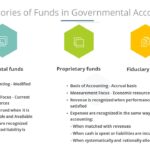
Governmental Accounting – Reporting Entity, Basis of Accounting, and Funds
The reporting entity consists of the primary government and its component units, which is a legally separate organization for which the primary government is responsible. The basis of accounting is the timing of the recognition of economic events or transactions. Measurement Focus is what is measured and tracked. Governmental funds use a modified accrual basis. […]
Continue reading
Asset Retirement Obligation
An Asset Retirement Obligation (ARO) relates to a legal obligation arising from the acquisition, construction, development, or normal operation of an asset Initial Recognition and Measurement The associated Asset Retirement Cost is added to the carrying amount of the asset when an ARO is recognized The fair value of the ARO liability is recognized when […]
Continue reading
Extinguishment of Debt
Issuers sometimes retire debt before matutiry, for eg., to eliminate high-interest debt when rates are declining or to improve debt ratios All extinguishment of debt before scheduled maturities are fundamentally alike and should be accounted for similarly The net carrying amount is the amount due at maturity, adjusted for Unamortized premium (discount), and Cost of […]
Continue reading