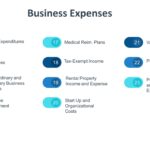
Self Employed Business Income and Expenses Self Employment Income is generally reported by Sole proprietors and Independent contractors The three requirements for an expense from a trade or business to be deductible from self-employment income are Ordinary, Necessary, and Reasonable Business Expenses may include: Rent Business Meals Travel Foreign Travel Entertainment Automobile Expenses Taxes Insurance […]
Continue readingAuthor Archive: niyatihemani
Employee Benefits
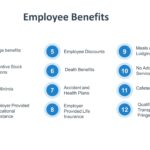
Employee Benefits Include the below: Fringe Benefits Employee Discounts De Minimis Qualified Transportation Fringe Benefits Employer-Provided Educational Assistance Employer-Provided Life Insurance Accident and Health Plans Death Benefits Meals and Lodging Incentive Stock Options Cafeteria Plans If you have found this blog to be useful, you may share with your friends. Thanks!
Continue readingAbove The Line Deductions
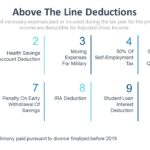
Above the Line Deductions are adjustments deducted from gross income to arrive at adjusted gross income (AGI) for Individual Tax Payers. Examples of Above the Line Deductions are: 1) Educator expenses 2) Health savings account deduction 3) Moving expenses for military 4) Penalty on early withdrawal of savings 5) Alimony paid pursuant to divorce finalized […]
Continue readingQualified Business Income Deduction
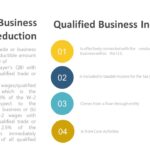
The QBID is available to non-corporate taxpayers, including Individuals, Trusts, and Estates. The Sec. 199A deduction is available to non-corporate taxpayers who have qualified business income, which requires the income to be from qualified pass-through entities. Qualified pass-through entities include sole proprietorships, S corporations, partnerships, trusts, and estates. Qualifying business income 1) Is effectively connected […]
Continue readingStandard and Itemized Deductions
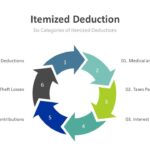
Taxable Income = AGI – Itemized Deduction on Schedule A or the standard deduction – QBID Standard Deductions Persons who are not allowed Standard Deductions are: 1) Persons who itemize deductions 2) Nonresident alien individuals 3) Individuals who file a “short period” return 4) Married individuals who file a separate return and whose spouse itemizes […]
Continue readingTax Authority
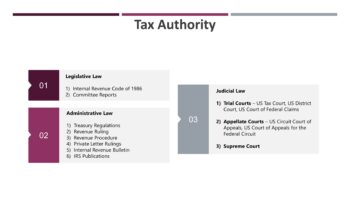
3 Sources of Authoritative Federal Tax Law are: Legislative law Administrative law Judicial law Legislative Law Legislative law, which comes from Congress is authorized by the constitution and consists of the Internal Revenue Code and Committee Reports. The Internal Revenue Code of 1986 is the primary source of Federal Tax Law. It imposes income, estate, […]
Continue readingTax Position
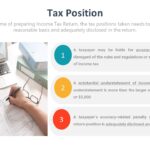
A taxpayer’s accuracy-related penalty due to disregard of rules and regulations, or substantial understatement of income tax, may be avoided if the return position is adequately disclosed and has a reasonable basis. Generally, the penalty is equal to 20% of the underpayment. Substantial understatement of income tax occurs when the understatement is more than the […]
Continue readingDue Dates For Filing Income Tax Return
Original and Extended Due Dates of filing of return of income for a calendar year tax payer Return Type Original Due Date Extended Due Date S corporation March 15 September 15 Partnership March 15 September 15 Estate and trust April 15 September 30 Individual April 15 October 15 Exempt organization May 15 November 15 A […]
Continue readingForeign Tax Credit
A deduction is allowed for foreign income taxes paid or accrued during the taxable year. Alternatively, both individual taxpayers and corporations may claim a Foreign Tax Credit on income earned and subject to tax in a foreign country or U.S. possession. One may not claim both the deduction and the credit. The Foreign Tax […]
Continue readingEstimated Taxes
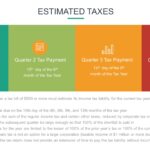
Each quarterly estimated tax payment required is 25% of the lesser of 100% of the prior year’s tax, provided the tax liability existed and preceding tax year was 12 months (not for corporations with taxable income ≥ $1 million), 100% of the current year’s tax, or 100% of the annualized income (for corporations with […]
Continue reading